
Blossoming Orchards, Starry Nights Vincent van Gogh
Arles
The light and colour of the country surrounding Arles radically transformed Vincent van Gogh’s art and for eighteen months he produced works of genius.
Here, the painter Lily Briscoe is confronted by the ghost of her much loved older friend, Mrs Ramsay. This is a moment of revelation as Lily recognises her old grief and pain surrounding the loss of Mrs Ramsay can be laid to rest. Now she is free to live life on her own terms.
‘Mrs Ramsay! Mrs Ramsay!’ she cried, feeling the old horror come back - to want and want and not to have. Could she inflict that still? And then, quietly, as if she refrained, that too became part of ordinary experience, was on a level with the chair, with the table. Mrs Ramsay - it was part of her perfect goodness - sat there quite simply, in the chair, flicked her needles to and fro, knitted her reddish brown stocking, cast her shadow on the step. There she sat.

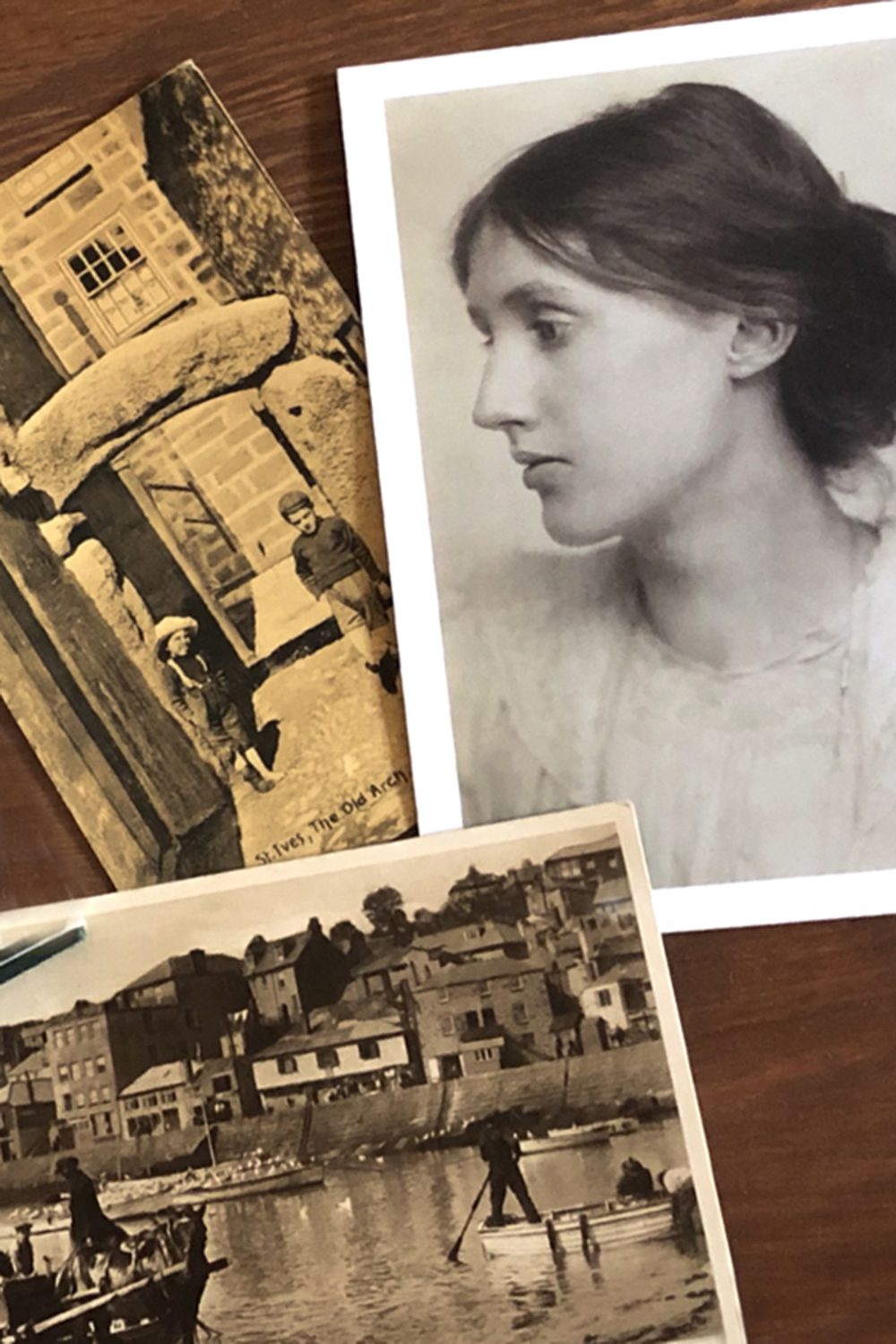



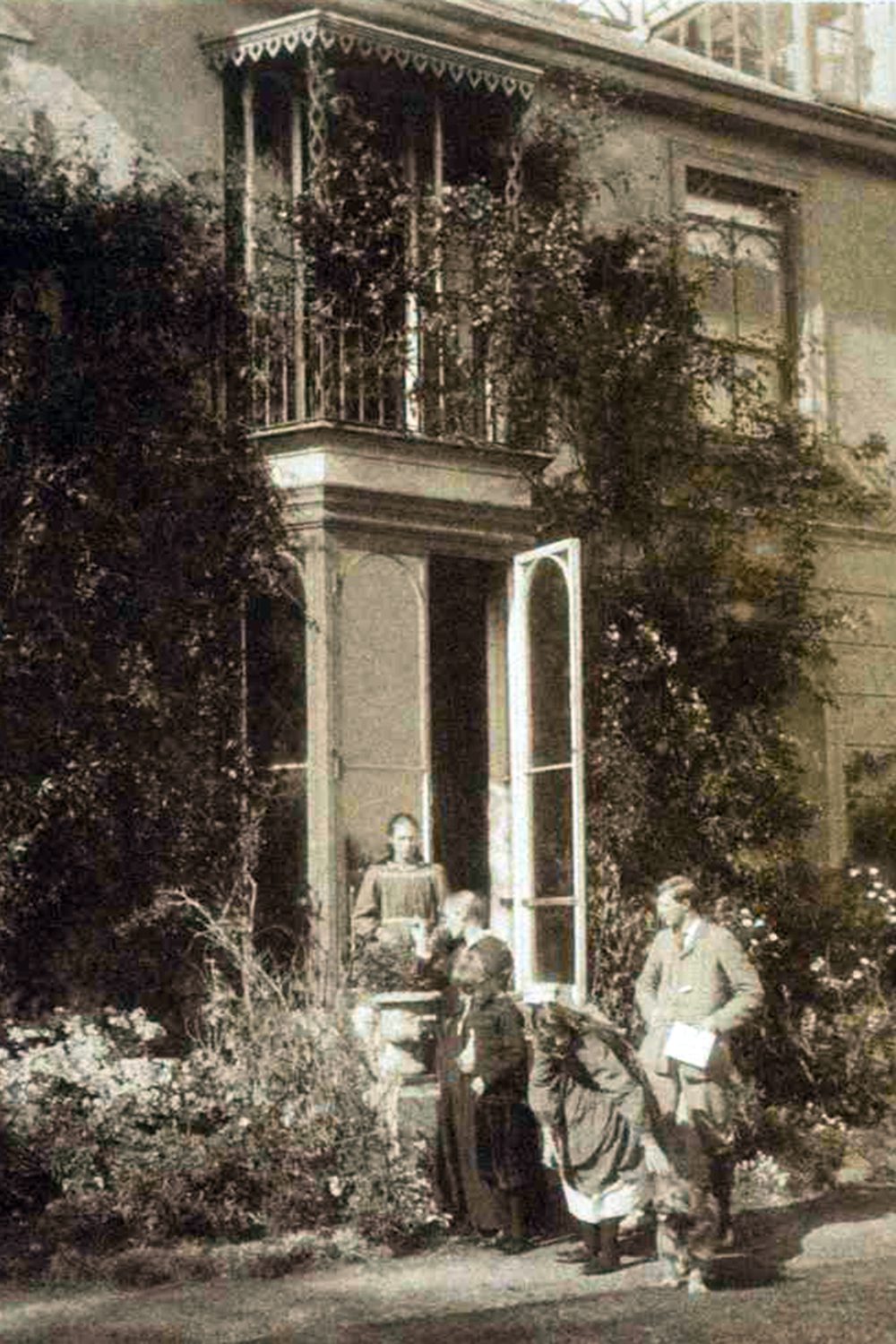
To thirteen year old Virginia Woolf, the untimely death of her mother, Julia Stephen, at the age of forty-nine seemed to be ‘the greatest disaster that could happen.’ In a household containing a distraught father and six siblings, all ‘tangled and matted with emotion’, Virginia sank into ‘a nothingness’ of depression and succumbed to the first of what would become numerous bouts of mental illness. She confessed that until she reached the age of forty-four ‘the presence of my mother obsessed me…She was one of the invisible presences who after all play so important a part in every life.’
As a child Virginia had worshipped her mother: ‘so quick, so funny, so definite, so active, and so very beautiful.’ In the the collection of her autobiographical writings Moments of Being she describes the incongruous procession’ of her large family, whose lives were ‘perpetually lit up by’ Julia’s presence. Virginia’s mother had been at the helm of the younger children’s organised existence in London: from the morning lessons and daily winter walks in Kensington Gardens to the family’s annual summer pilgrimage to St Ives in Cornwall. But as Virginia described it, those memories were:
all of her in company; of her surrounded; of her generalised, dispersed; omnipresent, of her as the creator of that crowded, merry world which spun so gaily at the centre of my childhood.
At heart, Virginia found her mother elusive: ‘how difficult it is to single her out as she really was; to imagine what she was thinking, to put a single sentence into her mouth!’
So who was this beautiful woman ‘formed in twilight’ who so powerfully influenced and haunted Virginia Woolf?
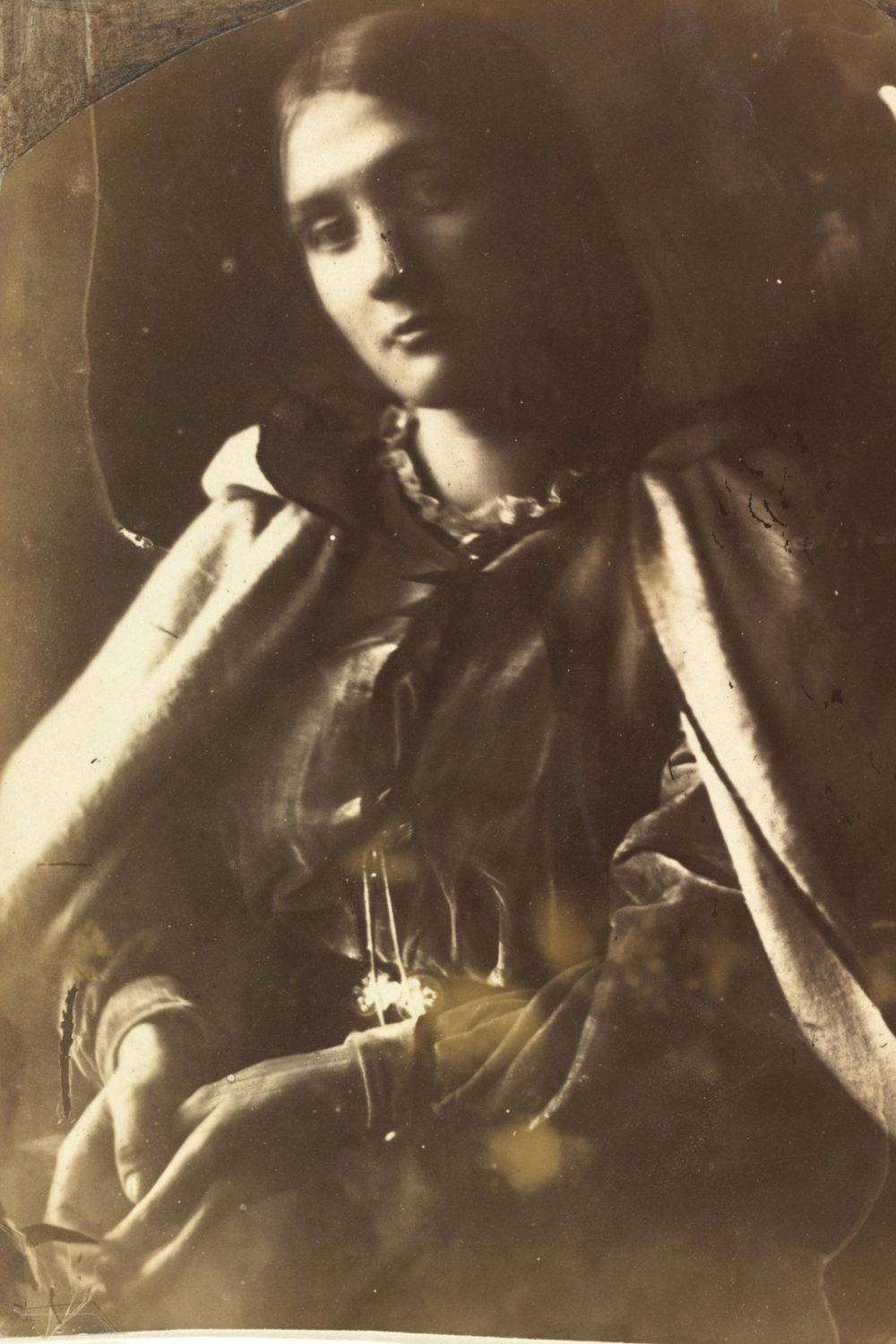
Julia was born in Calcutta to a well-connected Anglo-Indian family that moved to London’s Kensington when she was two years old. She grew into an intelligent, thoughtful, somewhat acerbic person and at the height of her beauty in her late teens she modelled for a number of Pre-Raphaelite painters. Her aunt, the celebrated photographer Julia Margaret Cameron, took over fifty photographs portraying Julia as loose haired and passionate, or as noble and remote. Virginia’s niece Angelica Garnett wrote that: ‘Extraordinarily different though they are, both manifestations are equally powerful, leading one to speculate about a personality that remains largely mysterious.’
In 1867 Julia married Herbert Duckworth, a young, affluent, sweet-tempered man who worked as a barrister. It was a love match but their idyllic union was cut short by Herbert’s sudden death. In the fourth year of their marriage Julia was left a widow at twenty-four; she had two infant children and was heavily pregnant with a third. Without warning, her bereavement thrust her from her sunlit existence into a realm which she described as ‘clothed in drab…shrouded in a crape veil’.
Herbert’s death destroyed Julia’s illusion of the unalloyed goodness of life. Her understanding of the world was profoundly altered and in response she cast aside her belief in God (who had been a cruel trickster), and suppressed her natural tendency to happiness and joy. In Moments of Being, Virginia wrote that her mother had chosen to press ‘the bitterest fruit only to her lips’. Prior to Herbert’s death she had ‘passed like a princess in a pageant from her supremely beautiful youth to marriage and motherhood, without awakenment’. She had become determined to ‘consecrate’ these years as golden. The ‘stainless’ and ‘exalted’ Herbert came to represent ‘pure love’, and so his death meant not only a tragic loss, but a disillusionment, making it ‘doubly tremendous’.
Virginia believed that her mother had compensated for a deep sense of futility by becoming subsumed in a life of useful toil. She poured her energy into nursing the dying and took up a life of dutiful self-sacrifice, convinced that sorrow was one’s lot in life, and that it had better be faced bravely.
Numb and empty of feeling, Julia wrote to her second husband that she had felt her only recourse had been to:
…do as much as I could and think as little. And so I got deadened. I had all along felt that if it had been possible for me to be myself, it would have been better individually, and that I could have got more real life out of the wreck if I had broken down more. But there was Baby [Gerald] to be thought of and everyone around me urging me to keep up….
Unable to sink properly into grief and her emotions (considered unseemly in a Victorian woman) she donned a ‘cheerful’ mask; while she sacrificed herself for others, this giving was not wholehearted because she quite literally felt dead inside.
After eight years soldiering on alone, Julia finally consented to marry the widower Leslie Stephen, who had been a family friend for many years. He was an ardent admirer of Julia’s and the match seemed inevitable, as her aunt Julia Cameron wrote to her:
I have long felt that Leslie was your fate…I felt that sitting ever close to you – tall, wrapt in gloom, companionless and silent, he would make an appeal to you which would be powerful because of the vastness of his intellect.
Leslie’s own response to the death of his first wife, Minny Thackeray, had been less about stoic resilience and more about collapse and self-pity. He was a learned and formidable man but beset by a litany of psychological ailments. Perhaps one of the reasons why Julia consented to marry him was that, like her, he continued to turn up to public events dressed in black, and he never urged her to ‘keep up’. She had also been deeply influenced by his writing on agnosticism. Leslie offered himself up as a willing patient to Julia, the self-styled nurse, and wrote to a friend about a shared hope for their union:
We want rest, protection from the outside world—a quiet domestic life with the least possible proportion of anything bordering upon gaiety. This sympathy between us grew up in a common sense of suffering.
Shortly after their marriage, Julia gave birth to four more children in quick succession. The house was full: in addition to Thoby, Vanessa, Virginia and Adrian Stephen there were the Duckworth children, George, Gerald and Stella; Leslie’s disabled daughter Laura; a host of demanding relatives; Julia’s querulous mother, seven servants and Leslie, the exceptionally difficult husband. Despite becoming increasingly worn and thin, Julia was highly organised, and seemed to juggle this complex household and her philanthropic work with ease. Virginia observed how her charm could extract ‘sparks of character’ from the dullest person. Her conversation was astute, occasionally biting, her laugh was intoxicating and she could mesmerise and enchant those within her orbit.
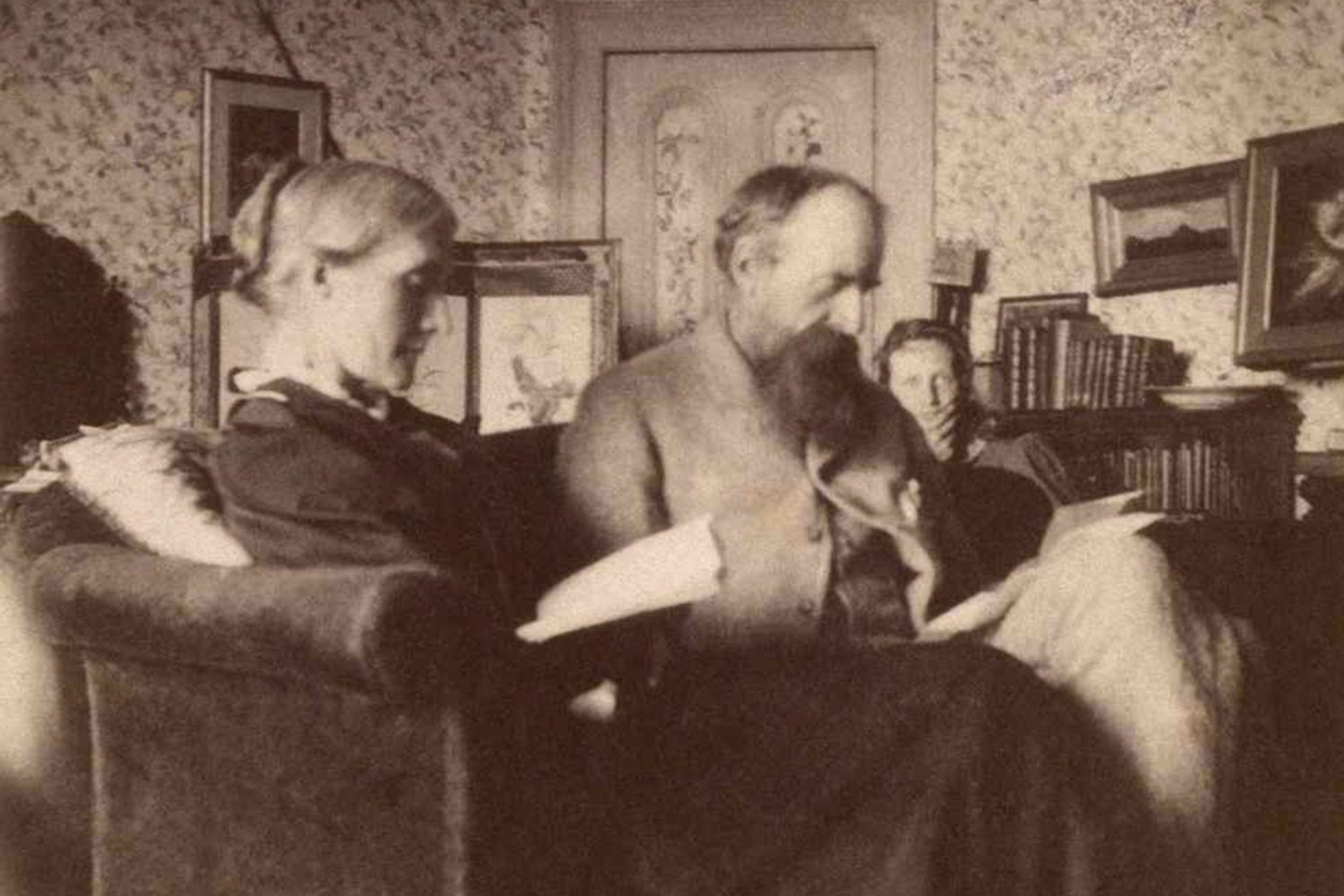
Virginia, the second youngest of this mixed brood, was an exceptionally bright, articulate and funny child. But try as she might, she could seldom capture Julia’s undivided attention. ‘Can I ever remember being alone with [my mother] for more than a few minutes?’ she asked. She had almost been relieved to fall ill, since she could then extract a few extra crumbs of her mother’s attention. Above is a poignant photograph of Virginia as she stands behind her oblivious parents, who sit reading intently side by side, on a sofa in the library of Talland House.
An added complication was Julia’s preference for her sons. Yearning for her love, Virginia and Vanessa looked on while their mother favoured one or other of her boys, especially her two eldest, who resembled her beloved first husband. According to Virginia’s biographer, Gillian Gill, this lack of an intimate bond with their mother ‘punched a hole in the emotional fabric of both sisters, and they suffered from it all their lives.’
Julia died just as the sisters were teetering into womanhood. She left them, as role models, a collection of unattainable archetypes: saint, angel, domestic goddess. It made Virginia greedy for mothers and she looked first to Stella Duckworth, then to Vanessa and to older friends Violet Dickinson and Ethel Smyth, for the deeper intimacy and nurturing she had never received from Julia.
The girls were also left with an hysterical, inconsolable father, who leaned on first Stella, the eldest daughter, for emotional support, and after Stella’s death, on Vanessa. Leslie produced a volume of memories that his children called his ‘Mausoleum Book’, extolling Julia’s virtues. It magnified her natural qualities to mythical proportions. Virginia said the tribute had done ‘unpardonable mischief by substituting for the shape of a true and most vivid mother, nothing better than an unlovable phantom’. It would take many years before she could raise her mother from the entombing pages of that book.
Gillian Gill believes part of the reason Virginia Woolf was drawn to writing was the opportunities it gave for her to create fictional versions of her mother in order to better understand her. The first time she wrote about her mother in the 1908 portrait ‘Reminiscences’, she finished on a contradictory note: ‘Where has she gone? What she said has never ceased.’ As Hermione Lee observes, Virginia kept returning in her writing to this strange combination of absence, interruption and continuation: ‘Coming to terms with this interruption, laying this ghost to rest, is one of the secret plots of Virginia Woolf’s existence.’
Julia Stephen appears in Virginia’s first novel The Voyage Out (1915), in Jacob’s Room (1922), in more fragmentary form in other novels, but it is in To the Lighthouse (1927) that she is evoked most vividly.
Virginia Woolf was forty-three when she began To the Lighthouse. She was at the height of her powers as a writer, having just completed Mrs Dalloway. She was also in the throes of an intense briefly physical relationship with the writer Vita Sackville-West.
When they met in 1923 Vita was thirty, a few years past her affair with Violet Trefusis (you can read about that here). Virginia described Vita as a ‘grenadier’: ‘There is her maturity and full breastedness: her being so much in full sail on high tides’. By comparison Virginia felt herself to be ‘coasting down backwaters’, a ‘virgin, shy & schoolgirlish’. Vita could ‘take the floor in any company’, someone to emulate.
Although Virginia’s work was well regarded it was not as commercially successful as that of Vita, who was also a prize-winning poet. Virginia admired the way she could dash off fifteen pages in a single sitting, as against her own laboriously produced two pages per day. Virginia seldom received praise from her Bloomsbury friends but now Vita gave her work the admiration and respect it deserved.
Curious about each other’s history, they explored their own and each other’s childhoods in letters and conversation. Together they examined territory that would have been difficult to deal with alone, beginning to realise their early lives had not been as rosy as they thought. They were each able to come to a more realistic appraisal of their families and the ways in which they had been shaped by them.
Looking back, Virginia saw that her childhood had been marked by dramatic splits. Each year it was divided between London and Cornwall, and then it was ended by the death of her mother. From that point the family had become fragmented, which she describes in To the Lighthouse ‘as if the link that usually bound things together had been cut, and they floated up here, down there, off, anyhow’. She came to see that she had been emotionally abandoned, by her mother’s distance and depression, and her father’s grief.
By the time she was writing To the Lighthouse in the mid 1920’s, the Victorian ideals of her parents had largely been rejected in England. This was in no small part due to the Bloomsbury Group who, some ten years before, had spearheaded a revolt against the self-sacrifice, sexual restraint, rigid sense of duty and respectability of their elders. Julia Stephen had been the personification of the Victorian womanly ideal described in ‘The Angel in the House’, a popular narrative poem written in 1854 by Coventry Patmore. This ‘Angel’ is adoring, self-sacrificing, tirelessly focused on the needs of others, devoid of self-interest. When Virginia and Vanessa were growing up, Patmore’s Angel was used to rebuke any hint of female subversion: those women who began the first all female colleges, for example, or who fought for a working wage or for suffrage.
These were the sorts of women Virginia would later write about in her essays. Although she did not support the political activism of her times because of its ‘tendency to reproduce rather than transform existing structures of domination’, she always encouraged women’s quest for advancement, famously asserting in A Room of One’s Own (1929) that women could achieve as much as men if they could only receive a decent education and sufficient financial means. This was in complete opposition to her mother, whose universal law in life (along with Mrs Ramsay’s) was marriage.
Virginia also grew hostile to the philanthropy adopted by her mother and other late Victorian women, which she came to understand as a type of politics practiced to extend their sphere of influence outside their homes. In refuges, hospitals and workhouses they ruled, organised and modernised: a domestic equivalent to their husbands’ imperial domination abroad. In To the Lighthouse Virginia suggests Mrs Ramsay is complicit in this imperial domination by standing her in front of a portrait of Queen Victoria. In her rescuing and defence of the odious Mr Tansley whom her children loathe, a man with an ‘acid way of peeling the flesh and blood off everything’, she is compared to a queen: ‘raising from the mud a beggar’s dirty foot and washing’. She is mocked for wanting to give ‘whatever she could find is lying about, not really wanted’, to those ‘poor fellows’ in the lighthouse who are probably bored out of their minds: ‘one must take them whatever comforts one can’, she says.
Virginia began To the Lighthouse at her country home, Monks House, in the summer of 1925, intending to finish it there two months later. In her diary she wrote that it ‘is going to be fairly short; to have father’s character done complete in it; & mothers [sic]; & St. Ives; & childhood; & all the usual things I try to put in – life, death &c.’ Worried that the theme might be sentimental, she hoped to ‘enrich it in all sorts of ways; thicken it; give it branches – roots which I do now perceive…’
The writing was initially sure and swift: she completed twenty-two pages in less than a fortnight. But as so often happened, the process strained her health and in the middle of a celebration at Charleston, Vanessa’s nearby home, she fainted.
The collapse marked the beginning of a long bout of ill health, with headaches and exhaustion. There were brief periods of recovery followed by relapses that lasted into the following year. ‘Can’t write’, she said in a letter to Roger Fry, ‘(with a whole novel in my head too – it’s damnable)’. She was forced to lead what she described as an ‘amphibious’ life, half in and half out of bed. In her diary Virginia wrote that even at the age of forty-three, she still failed to know the workings of her ‘queer, difficult, nervous system’. Before starting the novel she had been adamant that she was fit to wrestle with a mix of emotions that would have ‘raked’ her ‘raw’ just two years before. And here she was, ‘unseated again’.
Yet in her maturity, with enormous courage, she was able to meet and submit to these descents and find much to value in the process.
One goes down into the well & nothing protects one from the assault of truth. Down there I can’t write or read; I exist however. I am. Then I ask myself what I am? & get a closer though less flattering answer than I should on the surface – where, to tell the truth, I get more praise than is right.
She believed that these breakdowns afforded her glimpses of essential truths. Creative and personal revelations could emerge, and she wrote in a letter to Ethel Smyth: ‘Madness is terrific I can assure you, and not to be sniffed at; and in its larva I still find most of the things I write about.’
By January 1926 Virginia was writing again and living entirely in the book to such an extent that she was unable to think about what to say when away from it. She noted in her diary in February:
at last…I am now writing as fast and freely as I have written in the whole of my life; more so – 20 times more so – than any novel yet. I think this is the proof that I was on the right path; and that what fruit hangs in my soul is to be reached there.
In a letter to Vita she wrote about the importance of rhythm. ‘Style is a very simple matter: it is all rhythm. Once you get that, you can’t use the wrong words.’ She described rhythm as a wave which could ‘dislodge’ and unlock ideas and visions, ‘& then, as it breaks & tumbles in the mind, it makes waves to fit it.’
Aside from the characters, all ‘boiled down’, and the childhood, Virginia wanted to do ‘this impersonal thing, which I’m dared to do by my friends, the flight of time and the consequent break of unity in my design’. This she achieved by creating a three-part structure (some have described it as a novel in sonata form). It starts with ‘The Window’ in which we are introduced to the Ramsays and their visitors at their holiday house by the sea. There is the proposed visit to the lighthouse that is postponed due to the weather; Mrs Ramsay’s matchmaking, and the visitor Lily Briscoe’s attempt at a painting that she fails to finish. The section ends with Mrs Ramsay’s triumphant dinner party.
The middle part, ‘Time Passes’, in which ten years are condensed into one night, is the ‘impersonal thing’, the ‘break with the unity’ to which Virginia referred. The Great War has occurred and the deaths of some of the characters, including Mrs Ramsay, are revealed. The deaths are enclosed between parentheses, as if these brutal facts required a different language or came from a different age. We also learn that the family holiday house the Ramsays had so happily occupied in the first part of the book now lies empty and decaying. The sense of life and experience as a limitless abundance, and the glorious details of the first section are gone. All is now dark, stripped bare, impersonal. This is a post Victorian and post war world. All is irrevocably changed.
When she planned ‘Time Passes’ Virginia looked forward to tackling a new problem and breaking ‘fresh ground’. It became the part that gave her the most difficulty because she was grappling with finding a different type of language:
I cannot make it out – here is the most difficult abstract piece of writing – I have to give an empty house, no people’s characters, the passage of time, all eyeless and featureless with nothing to cling to; well I rush at it, and at once scatter out two pages. Is it nonsense, is it brilliance? Why am I so flown with words and apparently free to do exactly what I like? When I read a bit it seems spirited too; needs compression, but not much else.
As a character we have grown to love, Mrs Ramsay’s death and the nature of its delivery comes as a shock. But Virginia was determined to steer clear of any hint of sentimentality or the morbid dwelling on death that had followed the demise of Julia Stephen and so appalled her as a teen.
The second part of the novel was completed in May and Virginia began the final: ’The Lighthouse’. In this section surviving members of the Ramsay family and friends return to the summer house and finally make the visit to the lighthouse that had been promised at the beginning. Lily tackles the unfinished painting and completes it.
This three part structure mirrors the absence, interruption and continuation that the death of Julia Stephen had so forcefully impinged on the world of the young Virginia and which recurs as a theme in her writing.
In subsequent drafts Virginia altered or obscured more and more direct details of her life. She was at pains to remove direct biographical markers, although retaining numerous examples of her own struggles and joys. Aspects of Virginia are everywhere: in the child Rose who helps choose her mother’s jewellery in the bedroom; in young Cam in the boat, half loving, half loathing her father; in daughters Prue, Nancy and Rose who, while honouring their mother’s ‘strange severity, her extreme courtesy’, imagine for themselves alternative, possibly wilder lives that do not necessarily include the caring of others, or a man.
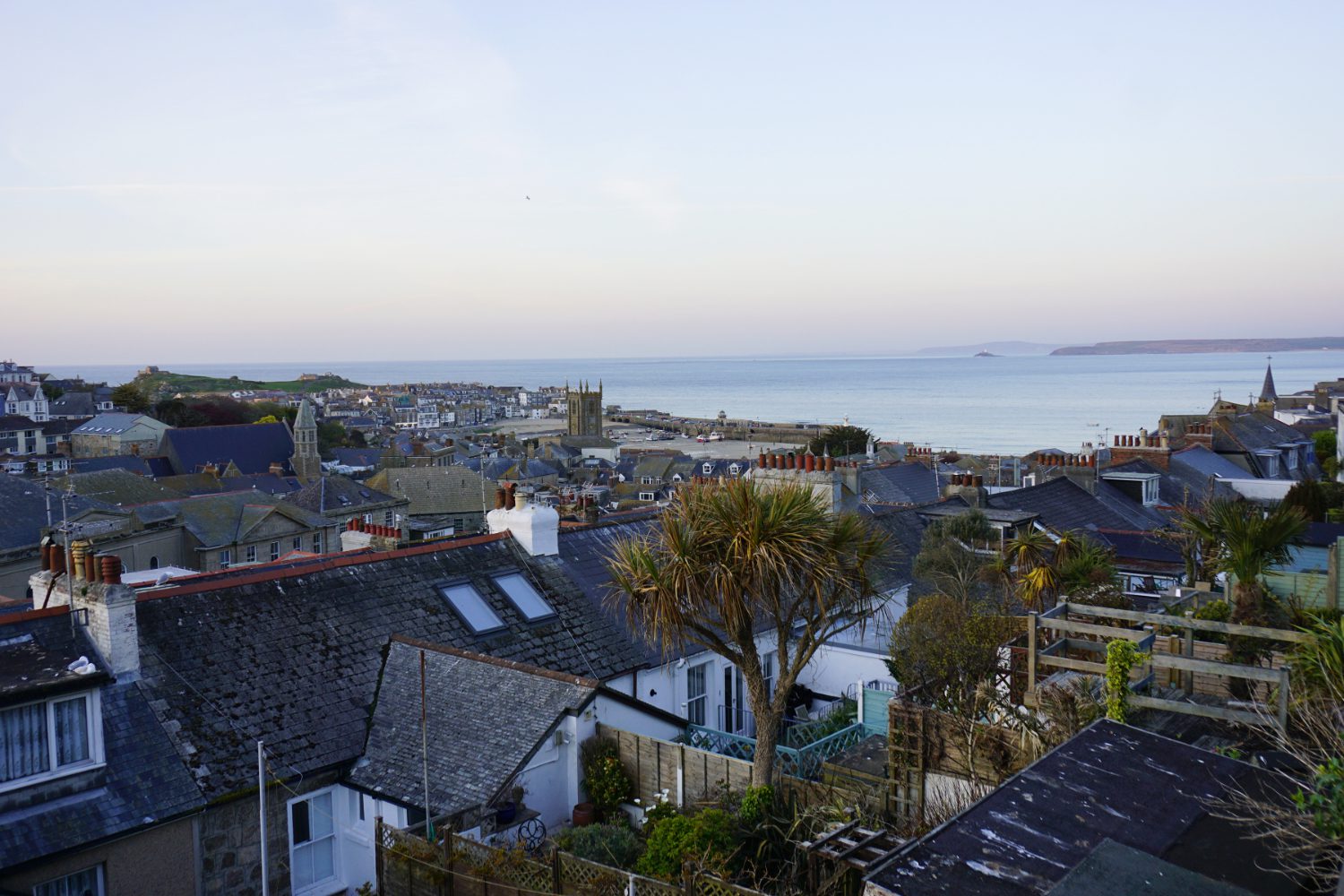
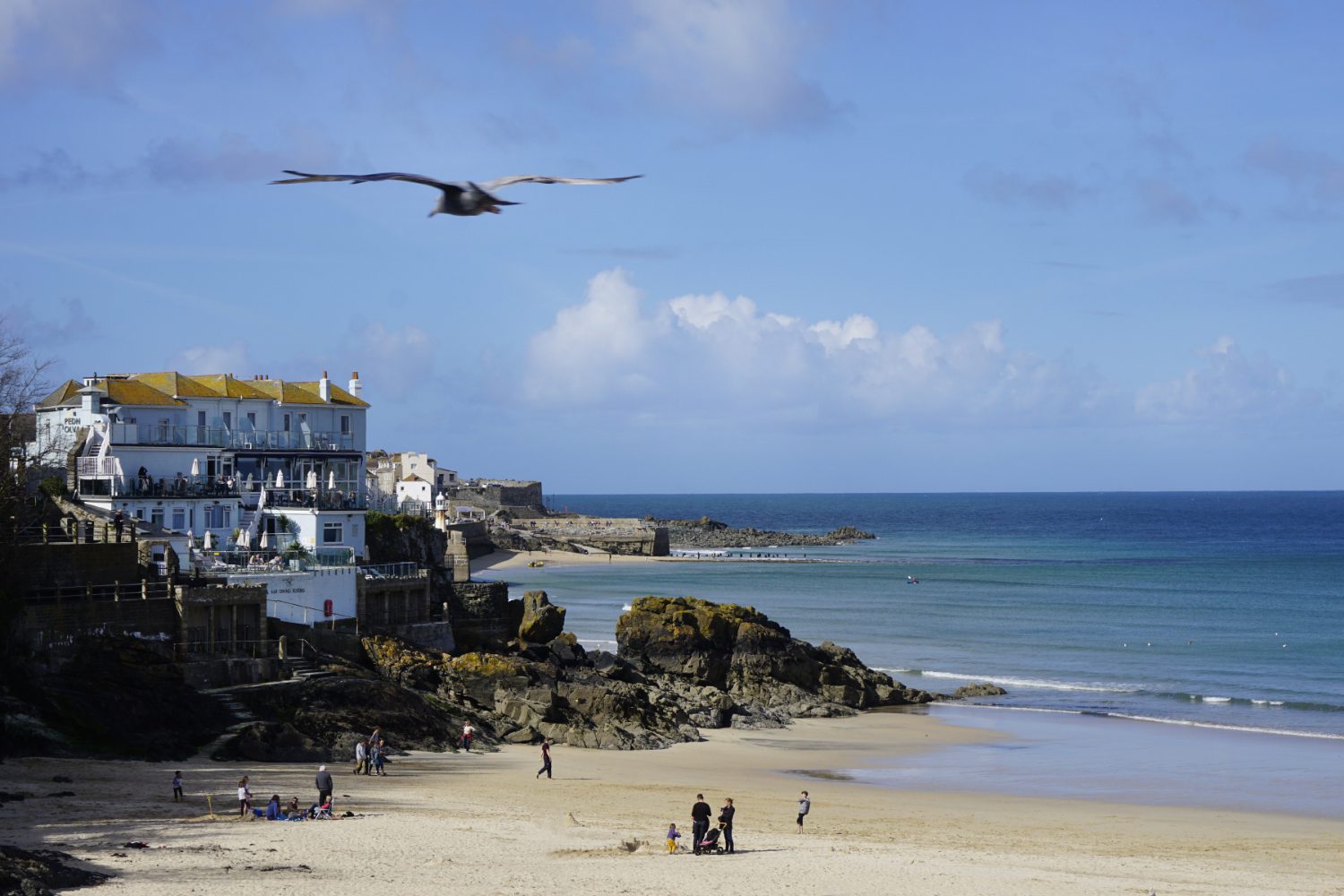
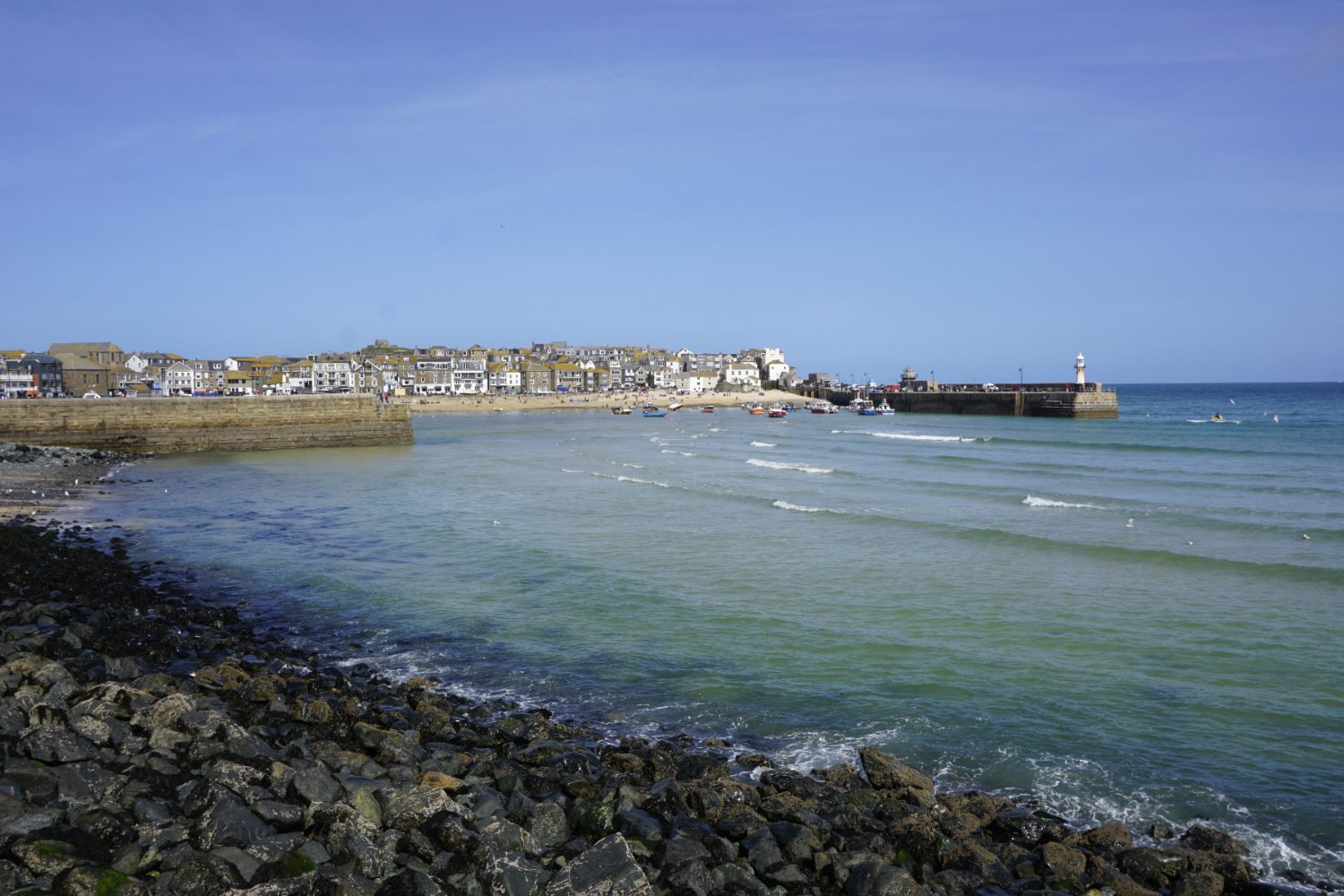
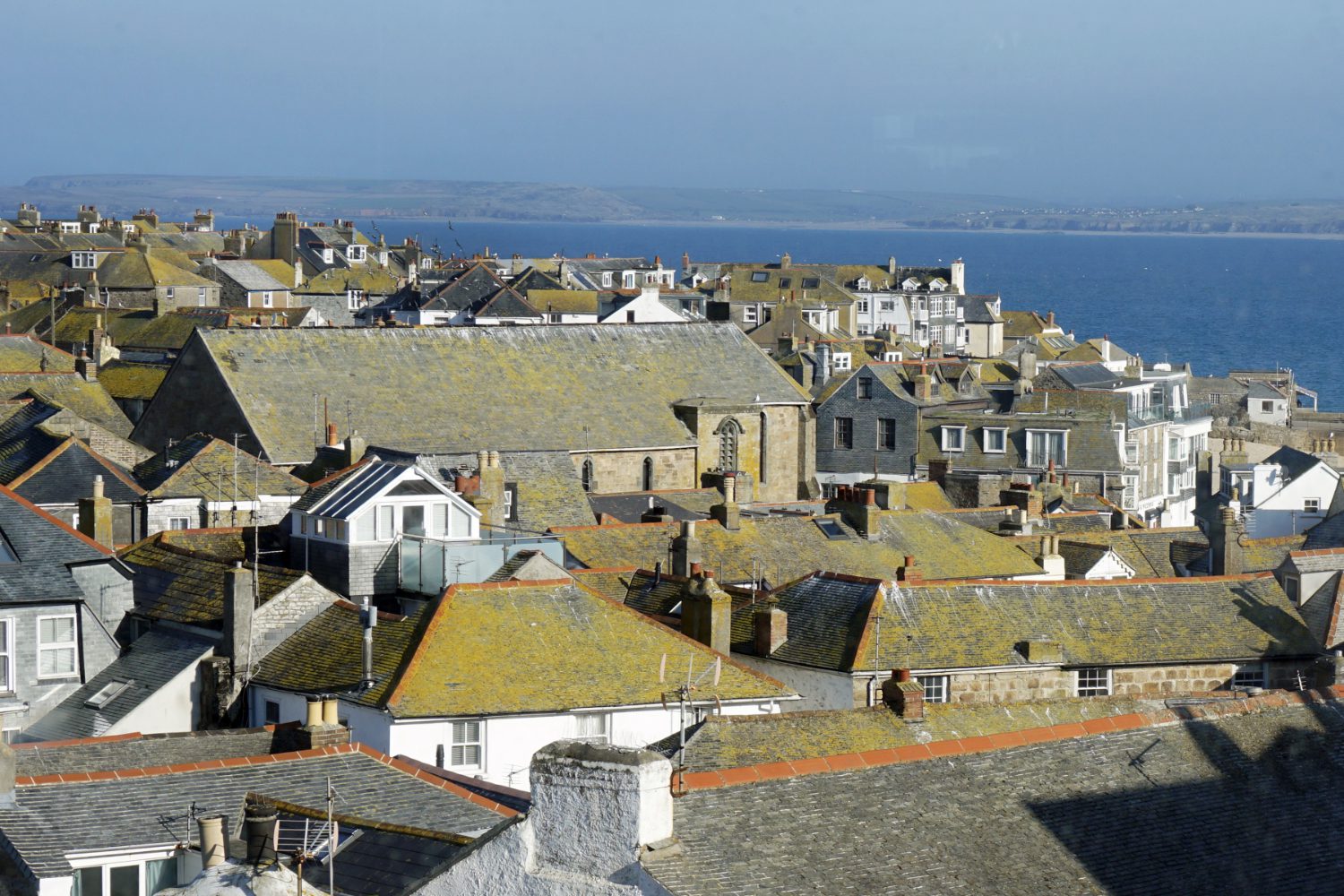
Virginia tried to obscure the setting, switching it from St Ives to the Isle of Skye in the Hebrides, but this was only the flimsiest disguise. The family home is recognisably Talland House, the flora and fauna distinctly Cornish, and although the topography of St Ives is abstracted, there is the same harbour view. In any case, as Margaret Drabble observes, the accuracy of her setting was not Woolf’s focus:
she was describing a place in time rather than a location in space. She is describing the past, where the dead live, for one of the magical powers of art is the power of resurrection.
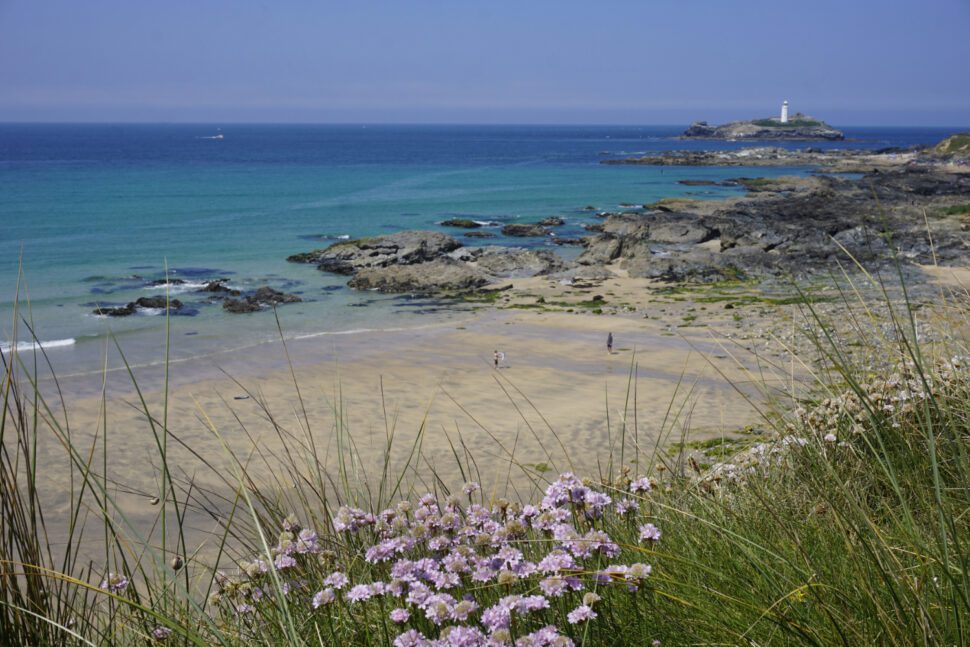
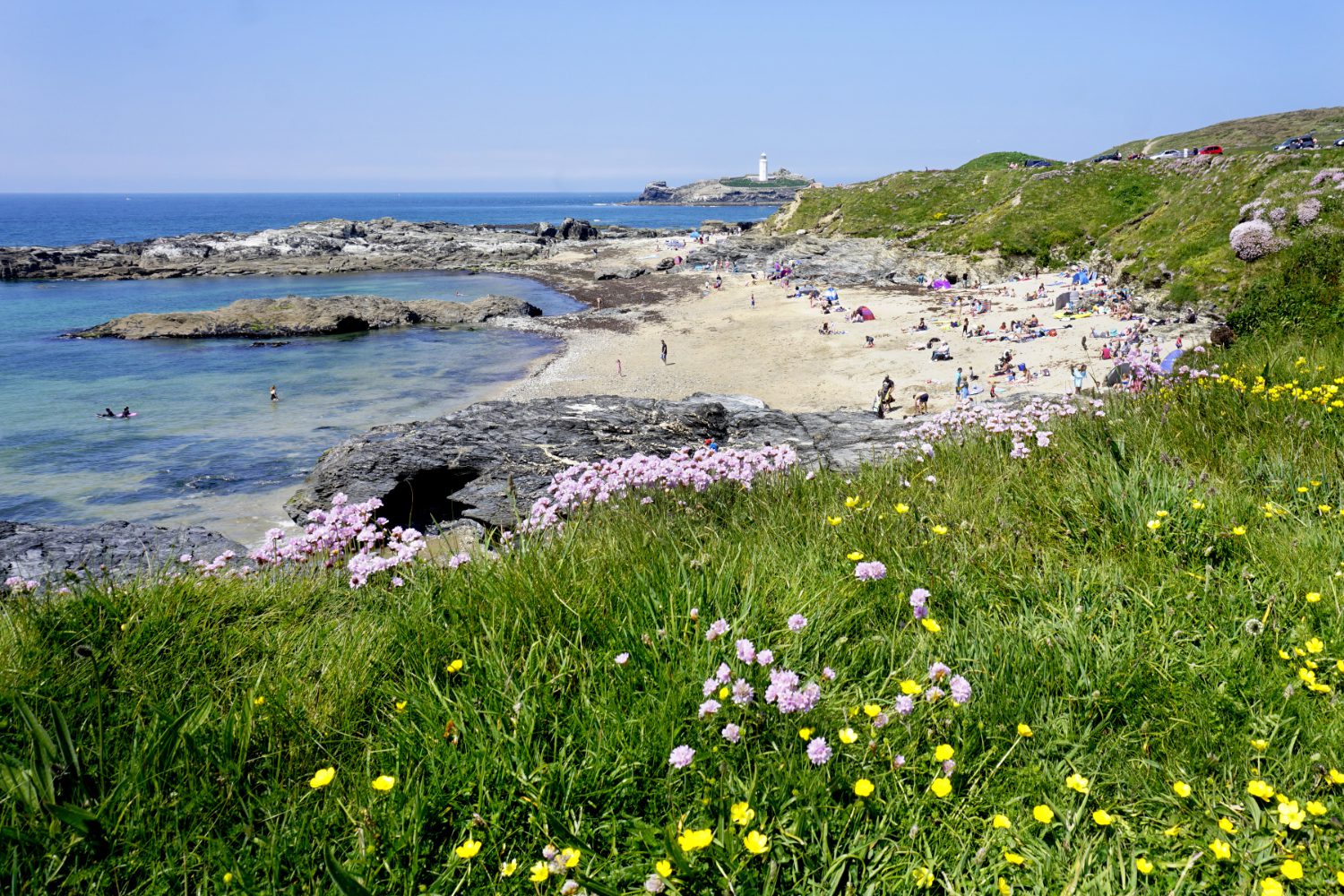
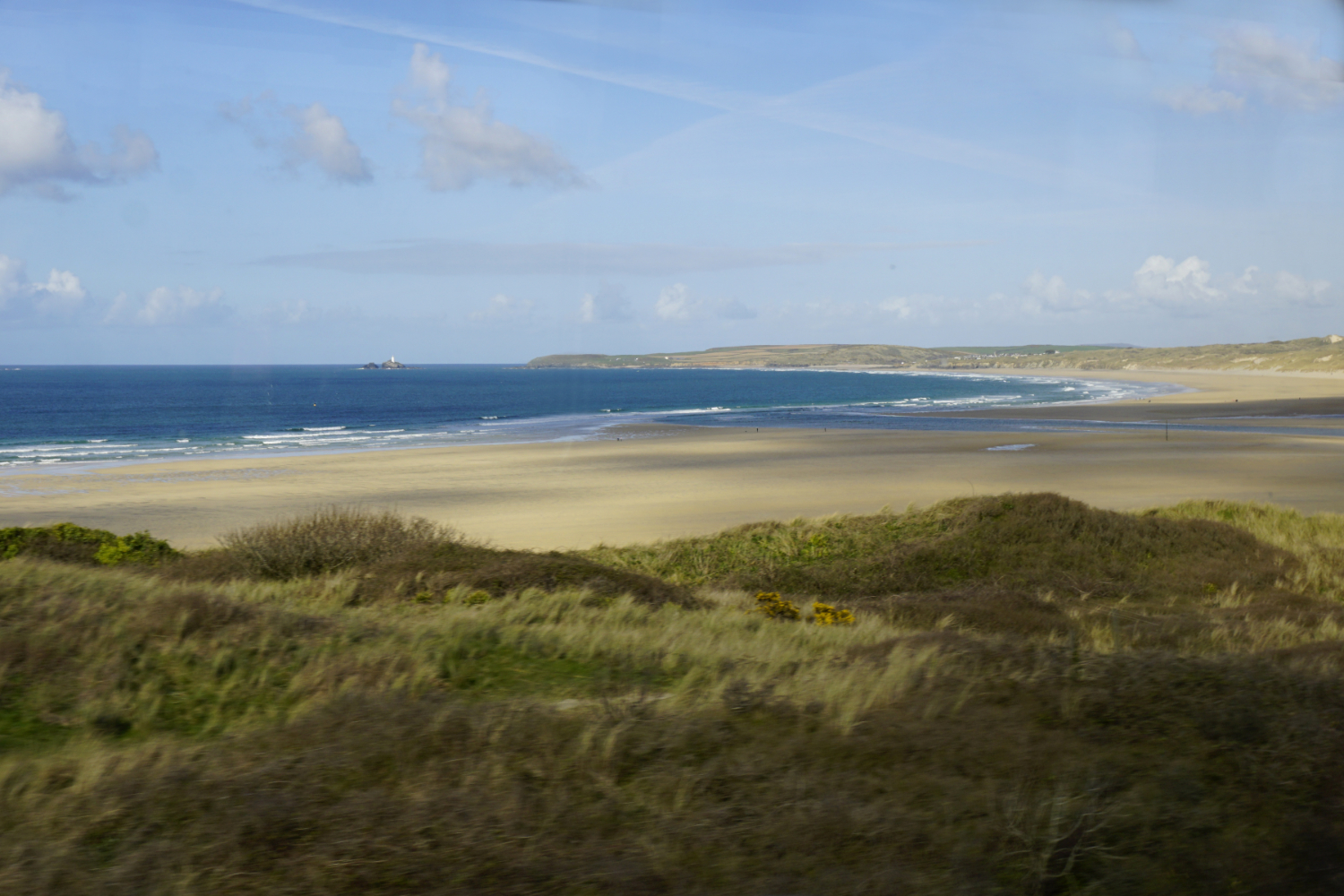
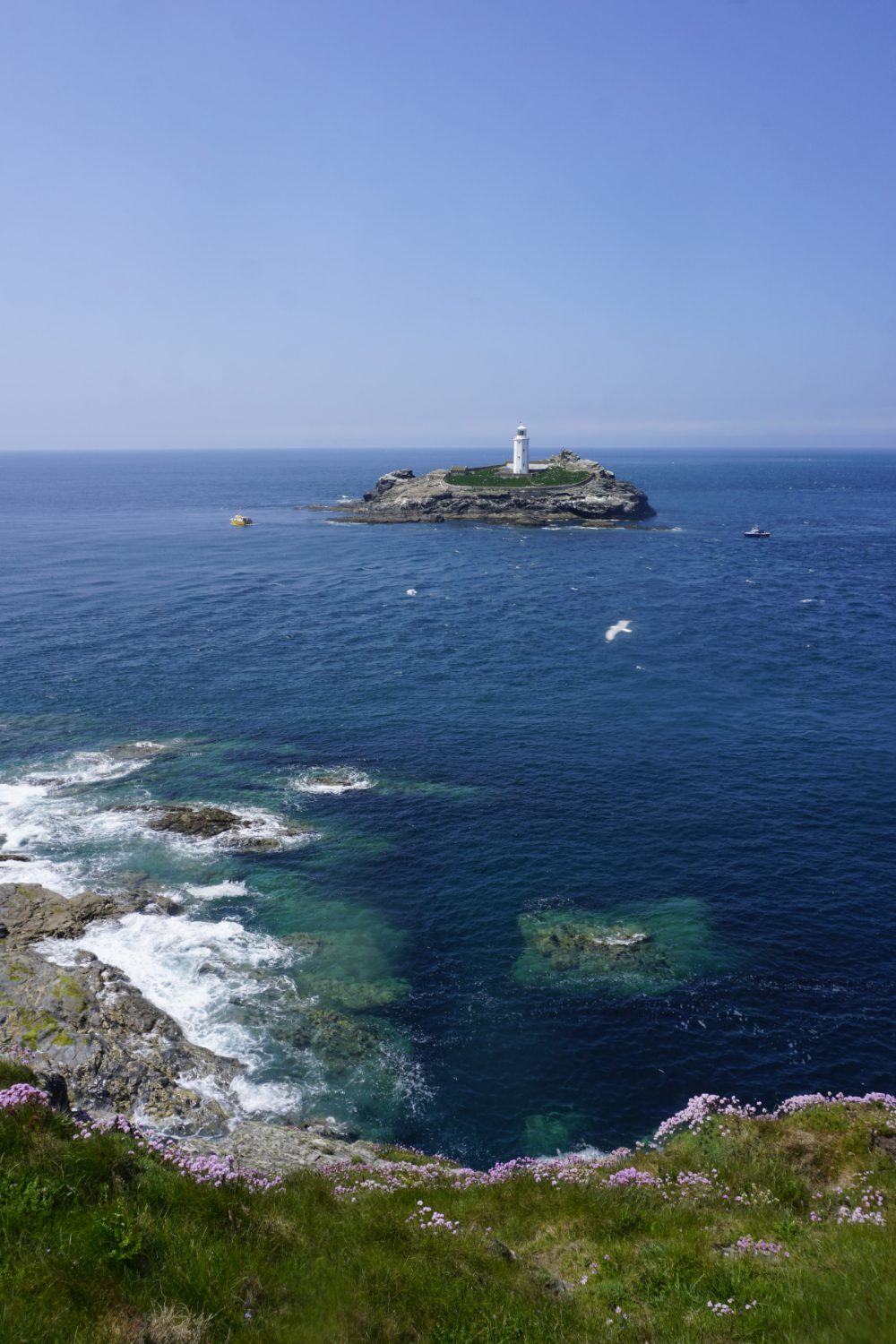
The sounds, colours and and rhythms of the sea haunt To the Lighthouse, giving it a translucent glow. Leslie and Julia Stephen come to life again as Mr and Mrs Ramsay in the garden of Talland House with its pampas grass, red-hot pokers, escallonia and, above all, the enigmatic presence of Godrevy Lighthouse across the bay. It is a view that makes Mrs Ramsay exclaim:
‘Oh, how beautiful’ For the great plateful of blue water was before her, the hoary Lighthouse, distant, austere, in the midst; and on the right, as far as the eye could see, fading and falling, in soft low pleats, the green sand dunes with the wild flowing grasses on them, which always seemed to be running away into some moon country, uninhabited by men…
Talland house and St Ives remained for Woolf a living link between the past and present. It was an anchor for her memories and she accorded it near mystical status. As her husband Leonard wrote about his wife’s incurably delicious romance for this place:
No casements are so magic, no faery lands so forlorn as those which all our lives we treasure in our memory of the summer holidays of our childhood.
Throughout the novel subtle changes in our understanding of the characters of Mr and Mrs and Mrs Ramsay occur that mirror Virginia’s mature perspective about her parents. At the start, Mr Ramsay appears to be the villain. He dashes James and his mother’s hopes of a visit to the lighthouse with his accurate forecast of inclement weather while
standing, as now, lean as a knife, narrow as the blade of one, grinning sarcastically, not only with the pleasure of disillusioning his son and casting ridicule upon his wife, who was ten thousand times better in every way than he was (James thought)…
Mr Ramsay’s insistence on speaking the ‘disagreeable truth’, no matter who will be upset, is often intrusive and unwelcome. It shatters the intimacy between Mrs Ramsay and her children. In her introduction to the Vintage edition, Maude Ellmann points out that while Mr Ramsay interrupts, Mrs Ramsay knits, as though she were repairing the gaps in connection made by her husband. But as the novel progresses, our perception of Mrs Ramsay as a charming, rather harmless woman, changes. We learn that she is someone who needs to be needed and who wishes to help so that she can be valued and admired. Her ‘exalted views of love and marriage’ and philanthropic pursuits compel her to meddle in the lives of others. She is someone who always gets ‘her own way in the end’. Mrs Ramsay’s desire to love and protect has become overbearing with the result that her ‘delicious fecundity’ seems as suffocating to the younger characters as Mr Ramsay’s ‘fatal sterility’.
The change in our understanding of the Ramsays is often related through the eyes of her younger friend Lily Briscoe, a visitor to the family home. Lily is the antithesis of Mrs Ramsay: unattractive, clumsy around men, a woman of a new age. Her feelings for Mrs Ramsay veer from adoration to dislike. On one hand she wants to be united with her ‘like waters poured into one jar, inextricably the same, one with the object’. She also resents Mrs Ramsay’s high-handedness; her disinterest in her painting and her insistence that she must marry: ‘there could be no disputing this: an unmarried woman…has missed the best in life’, pronounces Mrs Ramsay.
As an outsider, Lily has the necessary distance to watch Mrs Ramsay quench her husband’s insatiable thirst for sympathy, giving all her strength, her ‘laugh, her poise, her competence’ into restoring his ‘barrenness’. Lily sees how Mrs Ramsay exhausts herself over this tyrant and thinks: ‘she gave him what he wanted too easily’. She observes the way Mrs Ramsay’s self worth relies on how well she can perform her roles as wife and mother: ‘how worn she looks […] as if her own weariness had been partly pitying people, and the life in her, her resolve to live again, had been stirred by pity’.
While Lily paints a portrait of Mrs Ramsay, she senses her secret essence. What is locked inside her that keeps her going in the face of her complete exhaustion, she wonders. Wisdom? Knowledge? To Lily, Mrs Ramsay is a woman who ‘fifty pairs of eyes were not enough to get around’. And we as readers are just as mystified after being privy to Mrs Ramsay’s own thoughts and a wealth of accounts of her from other characters.
In the final section, Lily returns to the house with the remaining members of the Ramsay family. Her devotion to Mrs Ramsay has grown. She looks back with longing to a time before the war when suffering was not a constant reality and one could simply hope the weather might improve by tomorrow for that trip to the lighthouse.
One of the effects of the Great War had been a deep sense that all of human life was impermanent. Woolf poses the question: how does one overcome the sense that everything is shifting and fluid, this feeling that the constantly moving sea ‘eats away the ground we stand on’? How does one find stability and meaning in a state of flux? She suggests one solution is to achieve stillness in a state where we can be completely ourselves.
Mrs Ramsay had achieved that once at the third stroke of the lighthouse, after she had put the children to bed, and her usual temperament momentarily melted away. There she stood in the beam of the lighthouse, cleansed of all the lies produced by her social niceties. But like the lighthouse, Mrs Ramsay must keep moving. She is in search of truth but her search will never end. Francesca Lucchetti observes that:
Mrs. Ramsay is reminiscent of the women in Katherine Mansfield’s Prelude, in the way that the performance of gender obscures or becomes entirely intertwined with the self, so that the search for truth must be carried out while the performance goes on, and with it the constant production of lies. It remains beyond Mrs. Ramsay’s abilities to explain suffering without convenient lies, such as “We are in the hands of the lord”.
In the post-war world Lily struggles with a sense of futility but like Mrs Ramsay she searches for the solution to impermanence. She had often wondered why she continued to paint.
Always (it was in her nature, or in her sex, she did not know which) before she exchanged the fluidity of life for the concentration of painting she had a few moments of nakedness when she seemed like an unborn soul, a soul bereft of body, hesitating on some windy pinnacle and exposed without protection to all the blasts of doubt. Why then did she do it?
What was the point when most of her paintings were likely to end up stuffed under sofas? Mr Tansley’s remark to her ‘Women can’t paint’ still echoes in her mind after so many years. She presses on and begins to paint. Soon her rhythm is back and while painting she falls into her memories. She remembers the one occasion when she and Mr Tansley had drawn close. They had gone to the beach with Mrs Ramsay who had sat by a rock to write letters. Mrs Ramsay was terribly near sighted and while she was writing she was unaware that the wind was sweeping away some of her pages, and she and Charles Tansley rescued them from the sea, and had laughed and played like children under the gaze of Mrs Ramsay. The feelings the memory evoked of love and amusement produce a new understanding:
The great revelation had never come. The great revelation perhaps never did come. Instead there were little daily miracles, illuminations, matches struck unexpectedly in the dark; here was one. This, that, and the other; herself and Charles Tansley and the breaking wave; Mrs Ramsay bringing them together; Mrs Ramsay saying, “Life stand still here”; Mrs Ramsay making of the moment something permanent…
Lily realises that ordinary moments can be made permanent through feeling. It is what keeps Mrs Ramsay alive in her memory. This recognition, what Virginia called a moment of being, is deeply healing to her.
Towards the end of the novel when Lily resumes the ‘hideously difficult’ task of painting Mrs Ramsay’s portrait, someone sits in her usual chair by the drawing room window, and it is as if Mrs Ramsay is suddenly returned from the dead. There she is, simply sitting there, knitting as she always did, and in an instant she becomes ‘part of ordinary experiencce, was on a level with the chair, with the table.’ Lily discovers in a moment mixed with angst, recognition and relief that Mrs Ramsay no longer exerts the same hold over her. In an instant she is liberated from her longing to be like Mrs Ramsay and to live up to her expectations. She comes to understand that it is the passage of time that has gifted her this fresh perspective, and on a wave of this recognition, she is able to finish her painting. Lily Briscoe is 44 at the end of the book, the same age as Virginia Woolf when she finished the novel. Lily has decided not to marry. She will continue to paint in a modern style that is all her own. Having been told by Charles Tansley ‘women can’t paint’, she paints against the odds. Lily is a new breed of woman.
While Lily is having her epiphany, so too does James, Mr Ramsay’s son, who had expressed murderous hatred of his father at the outset. While finally making the much promised journey to the lighthouse with Mr Ramsay, James sees the lighthouse up close for the first time. It appears very different to his vision of it as a child, which had then been a ‘silvery, misty-looking tower with a yellow eye, that opened suddenly, and softly in the evening’. Now it is ‘stark and straight, and barred with black and white’. In realising that both visions of the lighthouse are true, James comes to recognise that ‘nothing was simply one thing’: just as his father can be a tyrant AND also an elderly and rather charming old man sitting in the boat with him, someone with whom James has a lot in common. It is the gift of distance that has caused the shift in this perception.
In the process of writing To the Lighthouse, Virginia managed to raise her mother from the entombing pages of her father’s Mausoleum book, stripping away the myth of perfection and restoring her to human dimensions by adding shadow and proportion. Likewise, she tempered memories of her father’s monstrously tyrannical behaviour by acknowledging his gifts.
After reading the novel at the end of January 1927, Leonard called it a ‘masterpiece’. During the months of revision, despite her mounting anxiety about its reception, Virginia was pleased with it.
Dear me, how lovely some part of The Lighthouse are! Soft & pliable, & I think deep, & never a word wrong for a page at a time.
By March 1927 it was ready for printing.
Shortly after the release of the novel, writer Arnold Bennett criticised its lack of action: ’A group of people plan to sail in a small boat to a lighthouse. In the end, some of them reach the lighthouse in a small boat. That is the externality of the plot.’
But Woolf was not focused on surface action. Along with James Joyce, Katherine Mansfield, and Marcel Proust she was one of the great innovators of the modern novel, directing the reader’s attention away from the outer action of plot to the inner lives of the characters. Action takes place in the characters’ heads, in their complex responses to others or to objects. As Jeannette Winterson notes in her recent Substack essay:
Woolf is so good at locating the reader on the inside not the outside. If you think of art, all art, as voyeurism and eavesdropping, then the best of it takes us to the inside of the situation. We are not observers, we’re not listening in, or taking notes, we have become part of the story as it docks with something of ourselves.
Time is also differently conceived. It changes from the usual chronology of outward actions that propel events sequentially from morning to night, to the consciousness of time as a series of impressions, memories and intuitions. Her characters experience a series of epiphanies, or moments of being: instances of intense clarity like those Virginia first experienced as a child in Talland House, that produce an understanding of an aspect of one’s self.
To the Lighthouse was Virginia Woolf’s response to an epistemic crisis of her times. In addition to the decline of Victorian values from the start of the twentieth century, post-impressionism had gained a hold in Europe, changing the standard for art. The breakout of the Great War in 1914 had created a final split between the past and present. Non-aggression pacts had failed, the horrors of trench warfare had ensued, old certainties no longer existed. She wanted to write a new form to meet the new age, and instead of novel, the word that came to her mind was ‘elegy’.
Virginia understood that her writing was demanding and in her 1924 essay, ‘Characters in Fiction’, she asked her readers to ‘tolerate the spasmodic, the obscure, the fragmentary, the failure.’ ‘Your help’, she wrote, ‘is invoked in a good cause. For I will make a final and rash prediction – we are trembling on the verge of one of the great ages of English literature…’
In the process of writing To the Lighthouse, Virginia overcame her obsession with her mother. In her notes about the novel she said:
I wrote my book very quickly; and when it was written, I ceased to be obsessed with my mother. I no longer heard her voice; I do not see her. I suppose I did for myself what psychoanalysts do for their patients. I expressed some very long held and deeply felt emotion. And in expressing it I explained it and then laid it to rest …
She wrote separately that writing the novel had produced the same effect about her father:
I used to think about him & mother daily; but writing The Lighthouse laid them in my mind. And now he comes back sometimes, but differently. (I believe this to be true – that I was obsessed by them both, unhealthily; & writing of them was a necessary act).
While writing the novel became a way of pacifying the ghosts of her parents, ‘so that they will cause no more trouble to others, it also meant they could be ‘at rest’ themselves’, she wrote.
Two years later, although she mined similar territory in The Waves, the tone had changed. As Hermione Lee notes, her memories appear more abstract, like a painter making repeated representations of the same subject (Monet’s ‘Haystacks’, for instance).
A year after the publication of To the Lighthouse, in her essay ‘A Room of One’s Own’ (1928), Virginia satirised the ‘intensely sympathetic’ wife of the ‘Angel in the House’, who ‘excelled in the difficult arts of family life’, who if there was a draft, ‘sat in it’, if there was chicken, ‘took the leg’. It was the voice of the ‘Angel’ that whispered in her ear to be ‘sympathetic and tender’ when she wrote her reviews. It tried to persuade her to ‘Use all the arts and wiles of our sex’ and ‘Never let anybody guess that you have a mind of your own.’ It ‘bothered’ and ‘tormented’ her and guided her pen, and,
I now record the one act for which I take some credit to myself…I turned upon her and caught her by the throat. I did my best to kill her…Had I not killed her she would have killed me. She would have plucked the heart out of my writing.
The death of Mrs Ramsay in To the Lighthouse was a necessary act. In killing the ‘Angel’, Virginia took back control of her life. Had she lived it is likely that Julia Stephen, with her intolerance of dissent and insistence that marriage and children were the sole basis of a woman’s fulfilment, would have stood in the way of Virginia’s accomplishments. For the Virginia Woolf we know to have come into being, the woman who flouted Julia’s rules, her mother needed to die.
Vanessa Bell was profoundly affected by To the Lighthouse. She did not respond to the ambivalence expressed towards their mother in the book but to the accuracy of her compelling character. In an uncharacteristically emotional letter to Virginia, she wrote:
you have given a portrait of mother which is more like her than anything I could ever have conceived of as possible. It is almost painful to have her so raised from the dead. You have made one feel the extraordinary beauty of her character, which must be the most difficult thing in the world to do. It was like meeting her again with oneself grown up & on equal terms…
Vanessa had felt so shaken by the encounter with both her parents after so many years that she confessed she had thought of little else since reading the book. Virginia had always tried to draw out the feelings that her sister had stubbornly repressed. Now, having produced in Vanessa such deep emotion, she found it ‘almost upsetting’.
The publication of her work usually left Virginia wracked with anxiety. She could not be indifferent to bad reviews or the criticism of her friends. But news reached her that many believed To the Lighthouse to be the best novel she had written and after strong sales of 2,200 copies, she and Leonard needed to quickly reprint. ‘I think’, she wrote in her diary, ‘I am now almost an established figure – as a writer. They don’t laugh at me any longer. Soon they will take me for granted. Possibly I shall be a celebrated writer.’
And now, with the Lighthouse behind her, freed from ‘inspection’ for the time being and liberated from the ghosts of her parents, the ‘deep dive’ into her mind could begin again.
The Skye Boat Song, The Corries
‘The Skye Boat Song’ describes Bonnie Prince Charlie’s escape to Skye following the defeat of Jacobite troops at Culloden. Despite the gentle, lilting music, it evokes menace and political unrest. Virginia Woolf used the song as a literary device to suggest a parallel. Although the Ramsay’s holiday in this beautiful place seems idyllic, dark threat (the Great War) looms. The choice echoes her recognition that nothing is simply one thing. The song’s association with the suppression of Jacobite resistance also enables Virginia to draw parallels with England’s relationship with Scotland and its wider colonial domination.
Even during the time the Stephens used to visit, St Ives was a haunt for artists who were attracted by the Mediterranean light, the turquoise sea and the picturesque little town. In the seasons of 1883-4, the American painter James McNeill Whistler stayed in St Ives and Virginia probably had him in mind when she wrote Mrs Ramsay’s comments about the work of Mr Paunceforte:
But now, she said, artists had come here. There indeed, only a few paces off, stood one of them, in Panama hat and yellow boots, seriously, softly, absorbedly, for all that he was watched by ten little boys, with an air of profound contentment on his round red face gazing, and then, when he had gazed, dipping; imbuing the tip of his brush in some soft mound of green or pink. Since Mr Paunceforte had been there, three years before, all the pictures were like that, she said, green and grey, with lemon-coloured sailing boats, and pink women on the beach.
Whistler brought with him to St Ives two assistants. One was Walter Sickert, who was to help shape modern British art (and who later taught Stella Bowen and championed the work of Nina Hamnett). At the time Sickert had just graduated from the Slade and was desperately poor. In 1893, just after the Stephens’ first summer at Talland House, he painted delicate scenes of the beach, full of windswept colourful figures. He knew the Stephens by sight and later became friends with Virginia, Vanessa and Duncan Grant, all of whom admired his work. Some fifty years after his time in St Ives he told Vanessa that her father had seemed to him to be the most impressive person in the area and her mother had looked supremely beautiful.
Virginia enjoyed Sickert’s easy, congenial company, and his unpretentious ‘workmanlike’ way of talking about painting. Sickert believed she uniquely understood the literary nature of his work. He felt his paintings had a narrative quality and in response to his request, Virginia wrote an essay about his work: ‘Walter Sickert: A Conversation’ (1934). In the essay she famously analyses his paintings, comparing his approach to writers like Balzac and Dickens and argues for a closer connection between the visual arts and literature. She also states her interest in Sickert’s ideas about space, and the way it takes on meaning through its relation to objects and human subjects. Linden Peach points out that Woolf similarly fuses the material and psychological in her novels, and suggests that Sickert may have influenced this aspect of her early works.
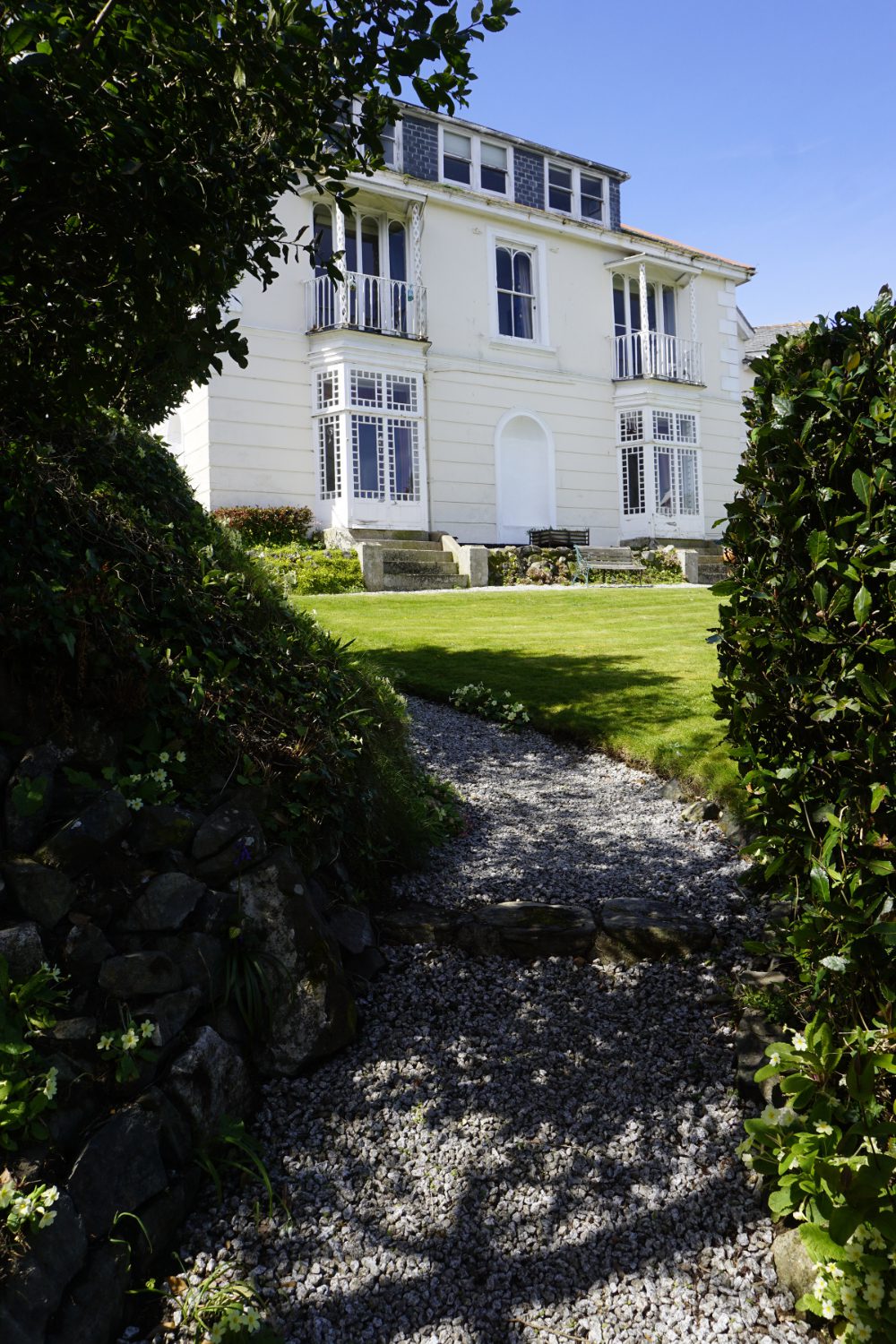
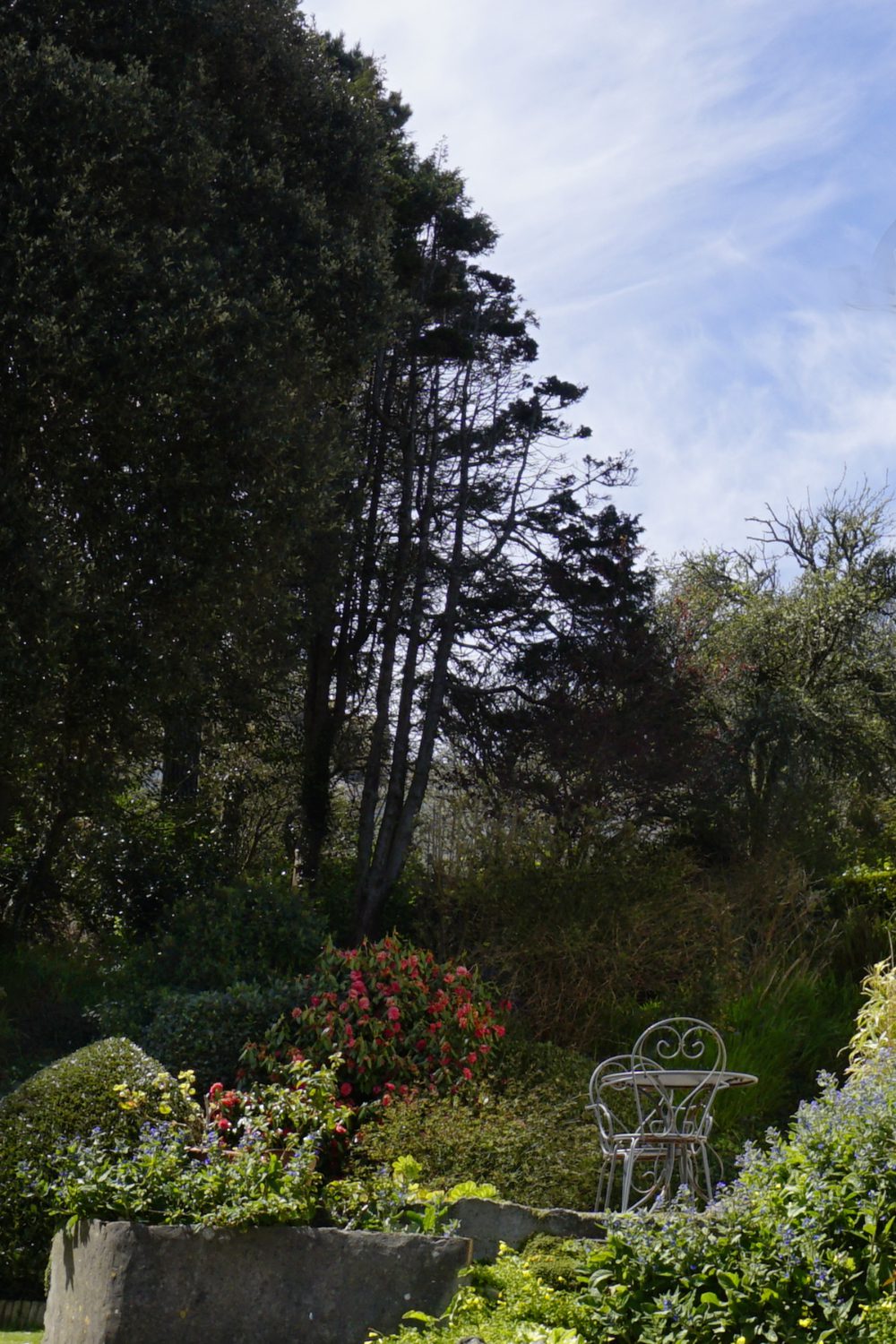
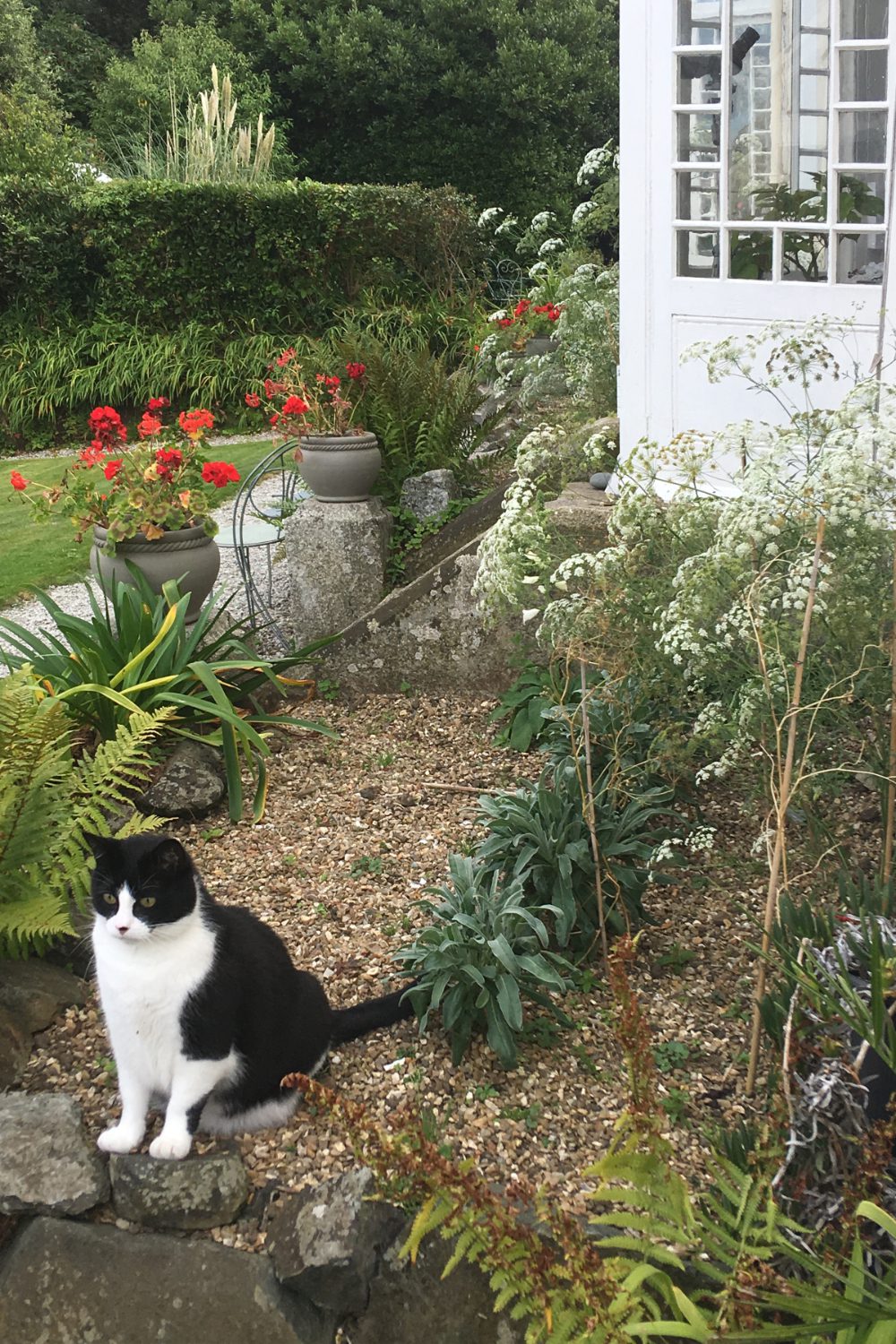
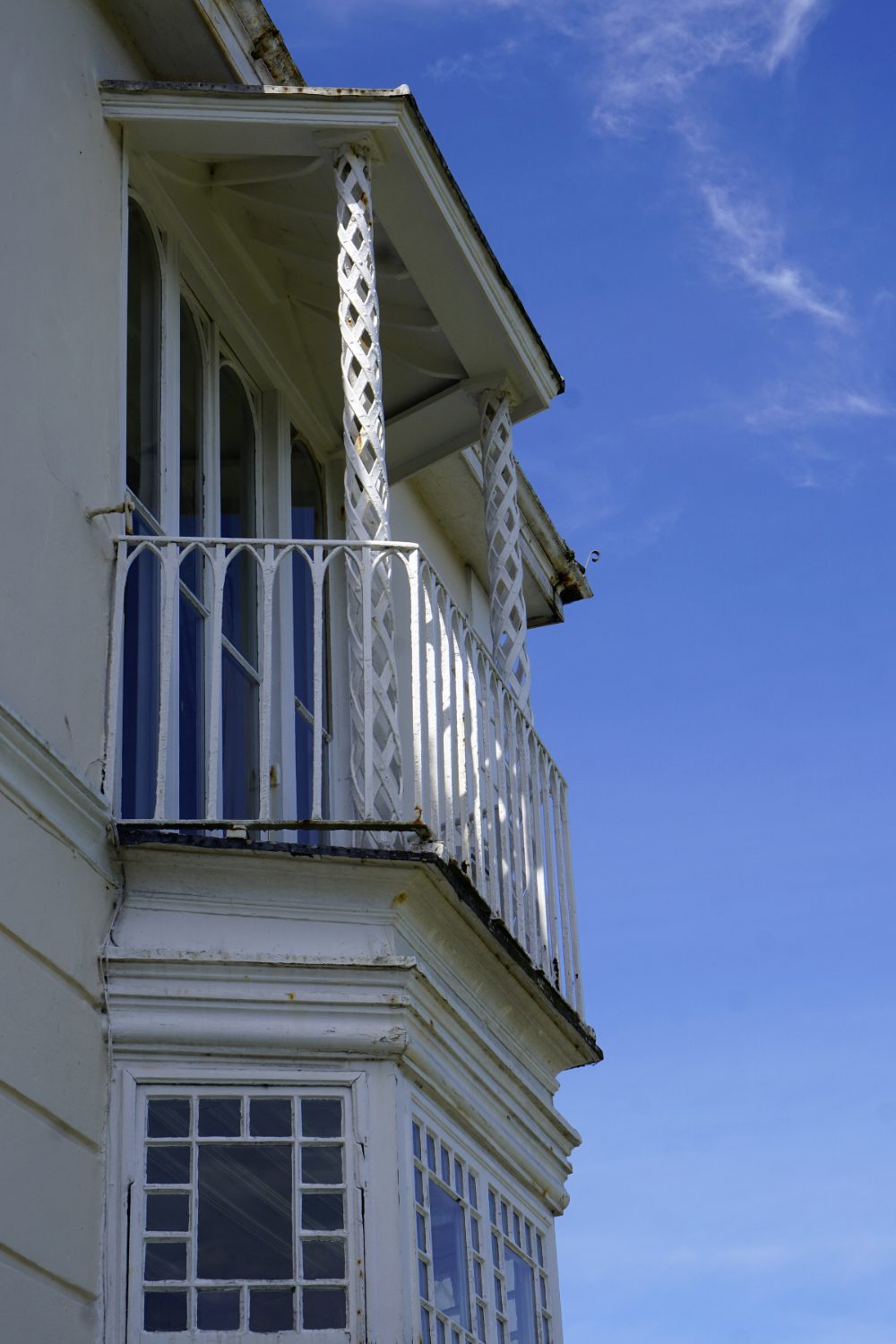
Talland House, Virginia Woolf’s family holiday home in St Ives, was converted into residential flats in the 1950s. For the last few years, the residents have been hard at work in the garden, assisted by a local heritage horticulturalist, to replant the vegetation and flowers Virginia Woolf remembered having grown there as a child. In a note they had hung in the garden, they wrote that they aim to create a space that is ‘dreamy, romantic, inspiring and holds up Virginia Woolf’s happiest memories and keeps those alive.’ You can follow their progress on Instagram.
The plants they have introduced include a beautiful pale yellow rose named after Virginia’s sister, the ‘Vanessa Bell’, purple Jackmanni Clematis that climbs a trellis against the house, red Geraniums in the stone urns on the terrace, a passionfruit vine, Alyssum – ‘Sweet Alice’, Cosmos, Red Hot Pokers, Violets, white Anemones, and Cyclamen. The Escallonia hedge, Pampas Grass and high garden wall were still there.
On a more recent visit I made, the house looked well cared for. I met a resident who explained that the owner understands people’s desire to see the house and there is an unspoken agreement that they may visit the garden (although the house itself is out of bounds of course). I’m sure Virginia Woolf would have approved as she was a keen literary pilgrim herself – she particularly loved Keats House and Montaigne’s Tower.
It turns out there is evidence for Virginia’s observation that she laid to rest her obsession by writing about her parents and expressing ‘some very long held and deeply felt emotion’. Many years ago I wrote an honours thesis on the beneficial effects of writing down thoughts and feelings about complex experiences. Pennebaker (1997) pioneered this research that demonstrates that expressive writing produces benefits to both physical and mental health but in order for it to work, the writing must always contain strong emotion. It is thought to be effective because it promotes clarity, insight, adaptive problem solving, and helps us to better manage our feelings. Michel de Montaigne (one of Virginia’s literary idols) did the same thing when he wrote down in detail his memory of a near death experience. This led to fresh insight that released him from his fear of death and freed him to live his remaining years richly and fully. You can read his story about that here.
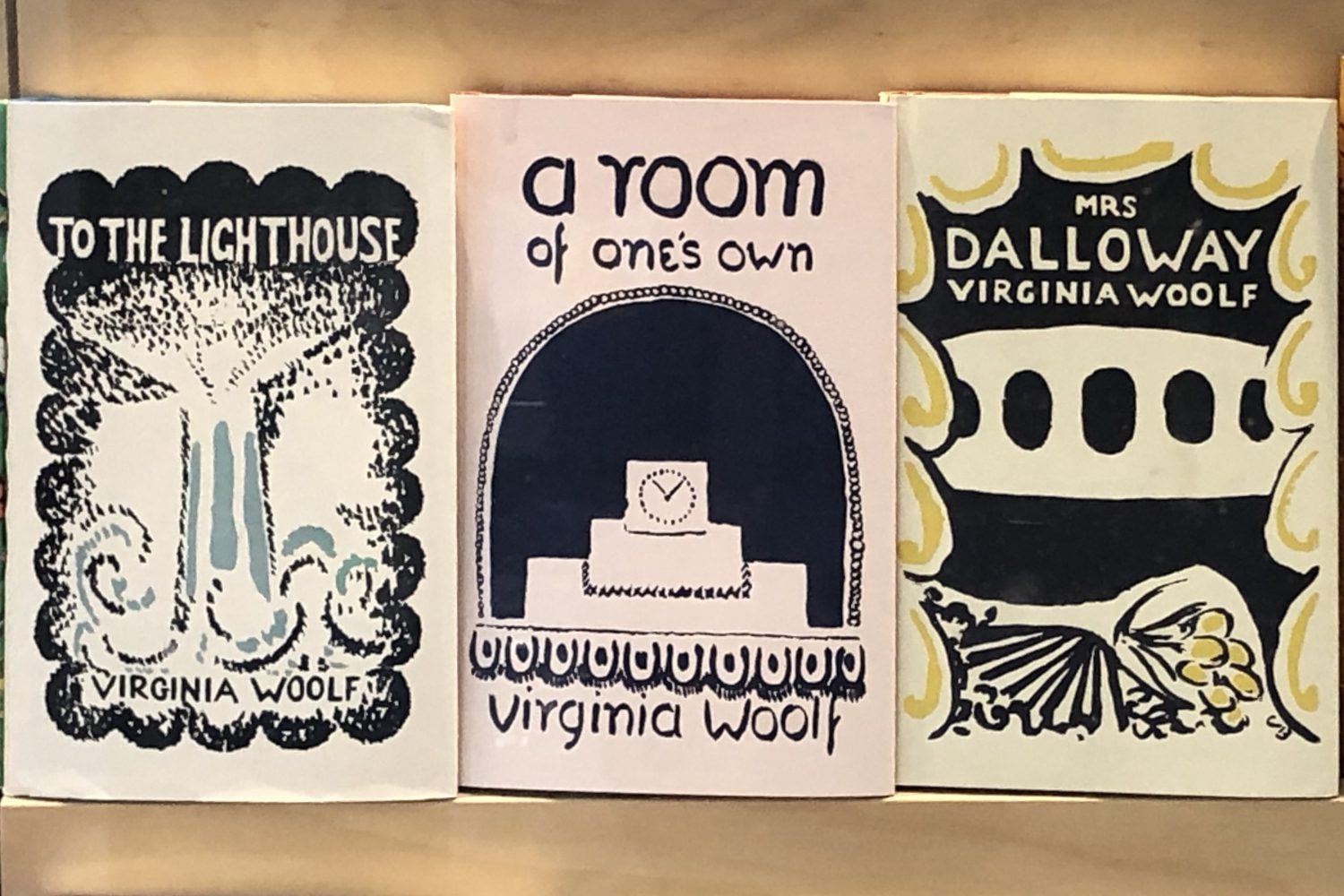
This year I was delighted to see in my local bookshop window three of Virginia Woolf’s works, including To the Lighthouse, with the original Hogarth Press covers designed by Vanessa Bell, printed by Penguin’s Vintage Classics (see my photo above). The front covers were part of a lifelong sisterly collaboration. As both writer and joint publisher of Hogarth Press, Virginia was in the unique position to choose the covers for her own books. For To the Lighthouse Vanessa produced a rare literal illustration but the waves and lighthouse are impressionistic, lending the book a sympathetically modern, yet feminine edge.
As I wrote this story, I noticed the eerie parallels that exist between the climate in which Virginia Woolf wrote this novel and ours. It made me wonder what new forms of art will emerge in response to the uncertainty of our times.
The International Virginia Woolf Society
To the Lighthouse can be read here.
Margaret Atwood’s hilarious article about the novel.
‘Walter Sickert : A Conversation’ (1934).
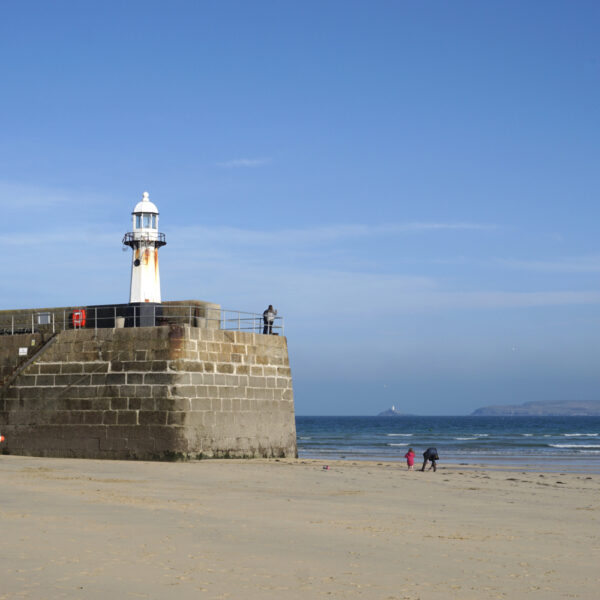
Visit St Ives.
Bell, Quentin. Virginia Woolf 1912-1941. Paladin, 1976
Bell, Vanessa. Sketches in Pen and Ink, Random House, 2998
Brown, Jane. Spirits of Place: Five Famous Lives in Their English Landscape, Penguin, 2002
Caramagno, Thomas C. The Flight of the Mind: Virginia Woolf’s Art and Manic-Depressive Illness, University of California Press, 1996
Chadwick, Whitney & Courtivron, Isabelle. Significant Others: Creative & Intimate Partnership, Thames & Hudson, 2018
Drabble, Margaret. A Writer’s Britain, Thames & Hudson, 2009
Dunn, Jane. A Very Close Conspiracy: Vanessa Bell and Virginia Woof, Little, Brown and Company, 1990
Gill, Gillian. Virginia Woolf and the Women who Shaped her World, Houghton, Miffflin, Harcourt, 2019
Hill-Miller, Katherine. From the Lighthouse to Monk’s House: A Guide to Virginia Woolf’s Literary Landscapes, Duckworth, 2001
Lee, Hermione. Virginia Woolf, Vintage, 1997
Lucchetti, Francesca. ‘Elegy to a lost Time: Virginia Woolf’s To the Lighthouse’, V
Peach, Lindon. ‘Re-reading Sickert’s Interiors: Woolf, English Art and the Representation of Domestic Space’, in Locating Woolf: The Politics of Space and Place, Eds: Anna Snaith, Michael H. Whitworth, Palgrave Macmillan, 2007
Pennebaker, J.W. Opening up: The healing power of expressing emotions, Guilford Press, 1997
Wing, J. F., Schutte, N. S., & Byrne, B. ‘The Effect of Positive Writing on Emotional Intelligence and Life Satisfaction, Journal of Clinical Psychology, 62 (10), 2006
Winterson, Jeannette. ‘Mrs Dalloway’ Mind Over Matter‘, Substack, 5 May, 2025
Woolf, Leonard. Downhill all the Way, The Hogarth Press, 1968
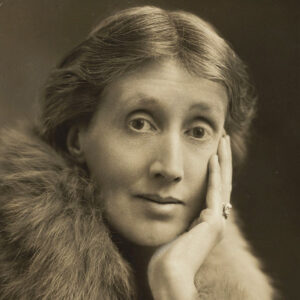
Virginia Woolf (née Stephen; 1882 –1941) was an English writer and one of the most influential 20th-century modernist authors. She helped to pioneer the use of stream of consciousness narration as a literary device.


Once again Jo Wing provides a snapshot of the life of the groundbreaking author of her time, Virginia Woolfe. I learn so much more detail about the accomplishments of such authors in these posts – more depth than I would reach in various articles, so I leave feeling enriched with a more accurate picture of who the author really was.
Nyema, thanks so much for this lovely comment.